Step 6: Fat grafting
Step 6: Fat grafting
An essential final component to the HDBC procedure is fat grafting to areas that require more muscular definition such as the male chest and shoulders or increased size and projection such as the female buttock and breast. Harvesting methods that are gentle, such as water-assisted harvesting, give the best longevity and viability. Adding plateletrich plasma (PRP) to the fat cells may increase the longevity, but studies are needed to determine the appropriate ratios. Fat that is suitable for grafting should be free of oil, blood, and connective tissue (tissue clumps). The authors use a specialized filtration system (Puregraft) that filters the harvested fat and removes all the aforementioned impurities and fluid in an enclosed system leaving the fat a yellow/gold color and increasing long-term retention (Fig. 60-13). Traditional decant and centrifugation methods may show higher contaminant levels, and the microscopic appearance of fat is less purified and has less concentrated viable adipocytes. Fat is then injected easily and smoothly to chosen grafting sites with possibly less risk of fat necrosis or inflammation, calcification, and/or infection.
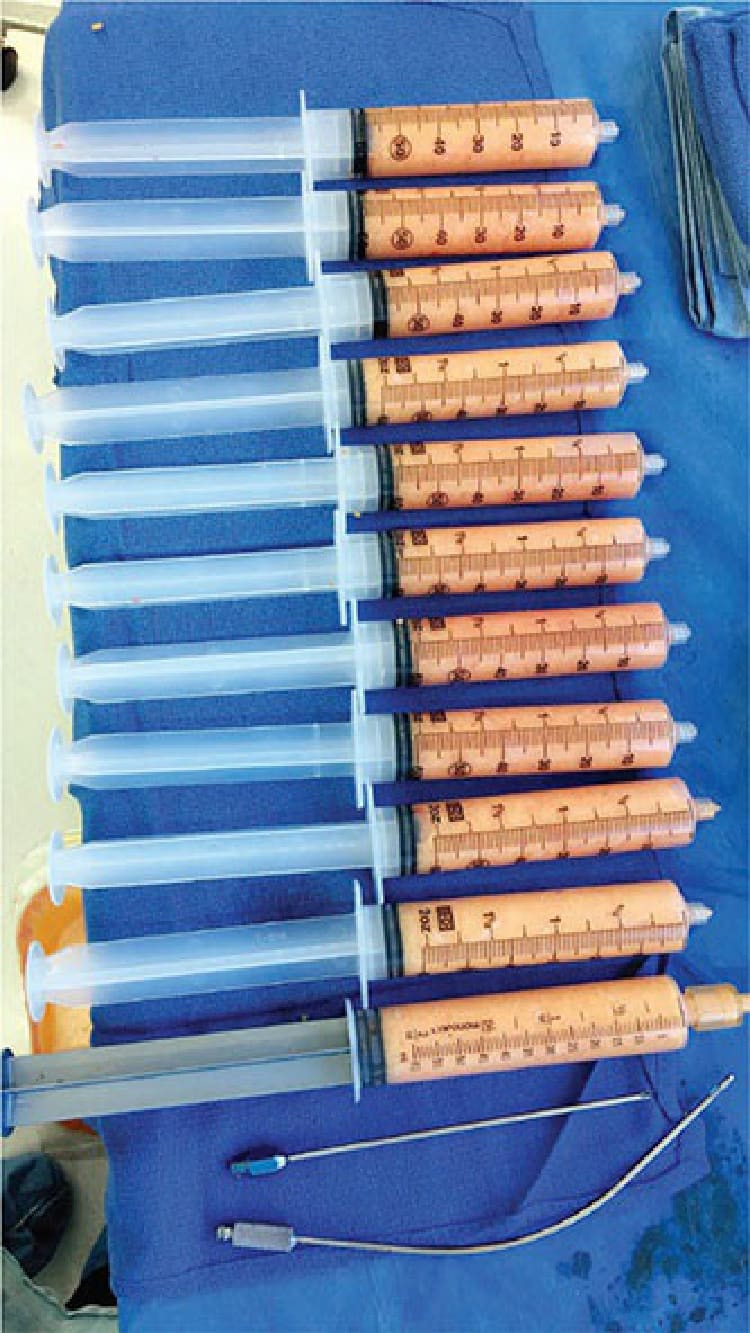
Figure 60-13. Fat Syringes. Prior to injection, fat is purified through filtration of oil, fluid, blood, and connective tissue.