DISSEMINIATING FINDINGS
DISSEMINIATING FINDINGS
The most interesting and novel of findings will not have any clinical impact if they are not disseminated and ultimately published. When choosing a journal for submission, it is important to consider the scope of the journal, its target audience, and the impact factor of the journal. It is important to look at a journal’s website to make sure your paper fits in with the scope and mission. If you are not personally familiar with the journal, it is important to read recent issues to understand the types of papers that the journal and editorial board select for publication. Typically journals offer publishing guidelines for various article types and will also offer guidance for how to respond to reviewer comments. Additionally, there are published reporting criteria for the various epidemiologic formats (Table 11-7). Despite a well-planned and executed study, rejection is always a possibility and researchers should be prepared to revise the manuscript and resubmit until the proper audience is reached. There are resources that can help guide dermatologic surgeons on approaches to addressing peer-review comments that maximize the chance of subsequent publication.16,17
CONCLUSIONS
Many methods exist for examining important clinical questions in the field of
dermatologic surgery. It is important to choose a study design that accurately addresses the research question and develop a protocol that will generate data needed to answer the question. Available funding and collaborative opportunities will help in the pursuit of clinical research. Regardless of years in practice or practice setting, all dermatologic surgeons have the ability to confront uncertainties in clinical practice through clinical research. Many of the high-quality surgical techniques and improvements in clinical care enjoyed by dermatologic surgeons today result from clinical research physician– scientists. Advancements in clinical research in dermatologic surgery have the ability to impact clinical practice and improve the patient and surgeon experience, and all dermatologic surgeons have the potential to become active participants in this process.
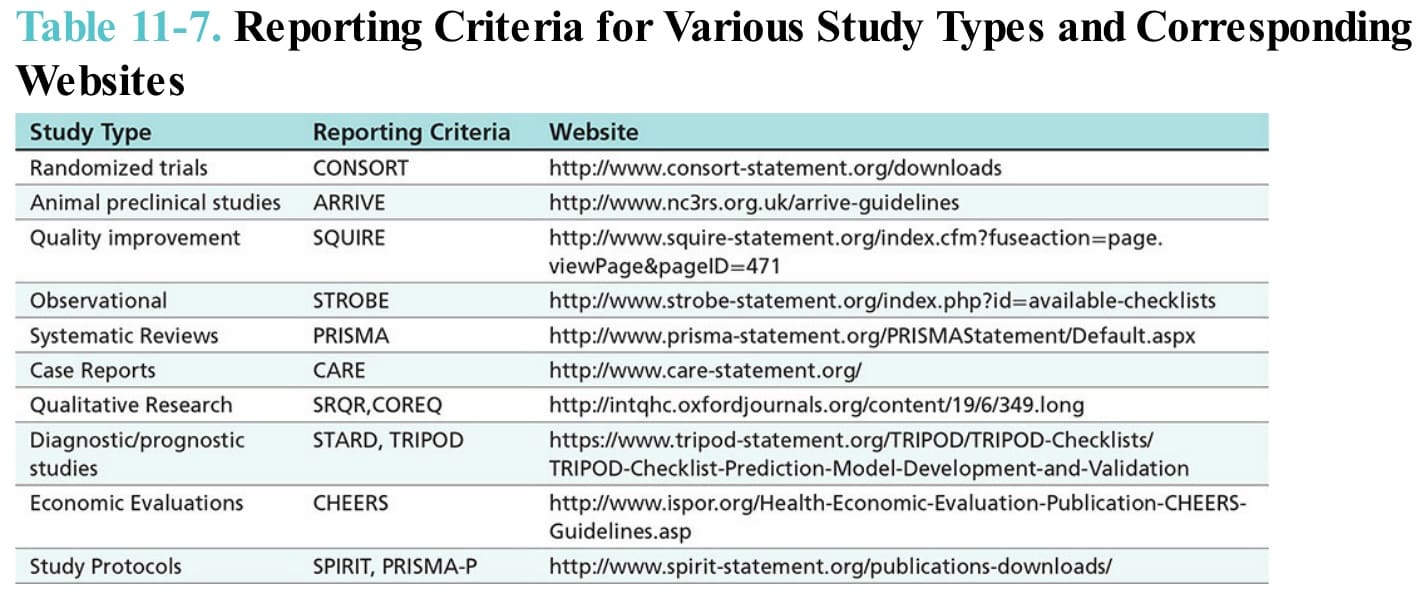
Table 11-7. Reporting Criteria for Various Study Types and Corresponding Websites