Sharps safety
Sharps safety
The most common risk to both surgeon and assistant in dermatologic surgery is needle puncture. Thankfully, the risk of disease transmission is low when using closed-bore sewing needles. Undoubtedly, the most critical protective measure is mandatory glove use when dealing with sharps of any kind.
Loose suture needles on the surgical tray are a common source of needle injury to both the surgeon and assistant. Several systems have been developed to minimize risk. Most commonly, all sharps are kept maintained in one area of the tray. In larger cases, however, multiple needles may be used. These may be kept organized with dedicated suture needle boxes, with a disposable foam block or pincushion placed on the field, or by placing a magnet under the surgical tray to attract and organize sharps.
To avoid scalpel injury at the conclusion of a procedure, a surgical blade remover is required to separate disposable scalpel blades from the handle. The most common devices require two hands: one to hold the scalpel, and the other to operate the clamp and remove the blade (Fig. 5-22). With practice, these are safe, reliable, and cost effective. Counter- or wall-mounted devices have also been created to allow for onehanded operation. With these devices, the scalpel is inserted, blade first, into the machine and the blade is safely removed. While efficient, these require frequent
replacement.
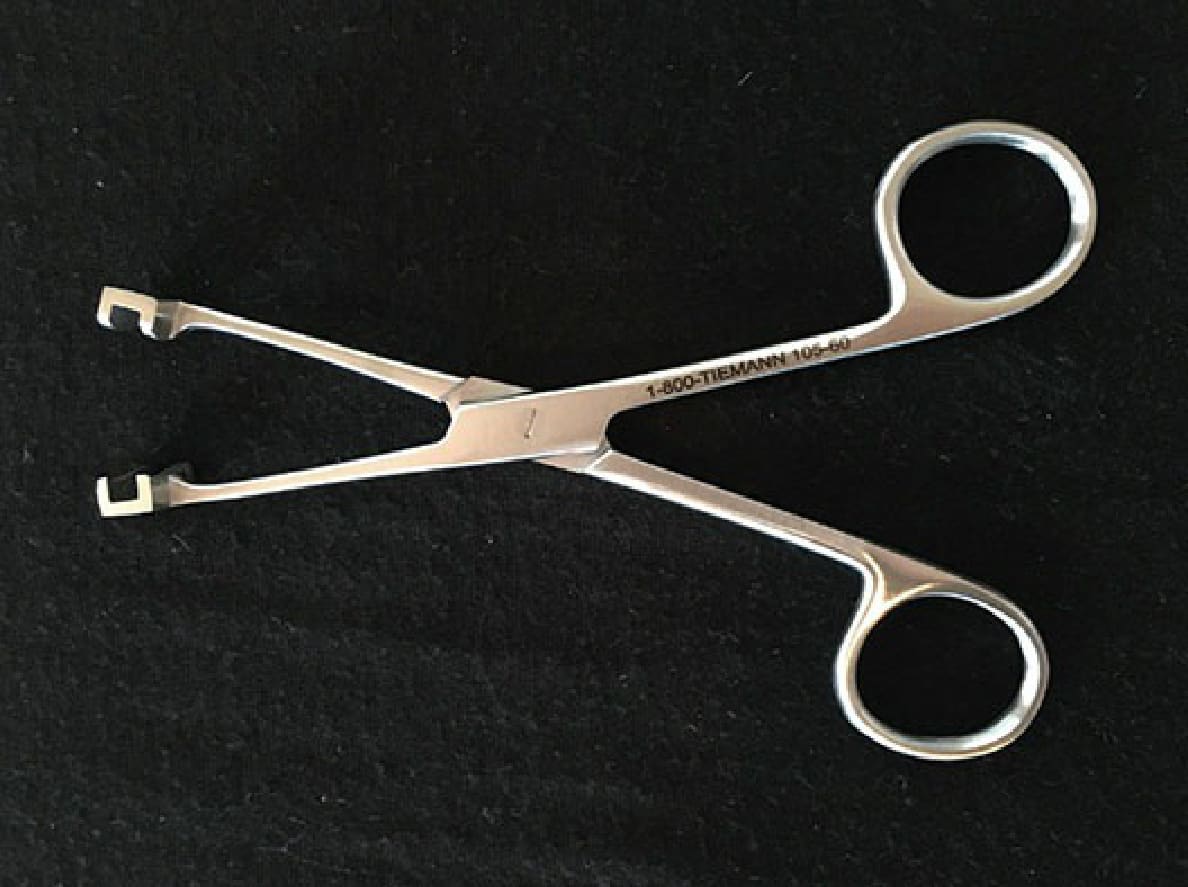
Figure 5-22. To avoid scalpel injury at the conclusion of a procedure, a surgical blade remover may be used to separate disposable scalpel blades from the handle.