Skin hooks
Skin hooks
The skin hooks used in dermatologic surgery are long, tapered instruments with a small, sharp hook at the end (Fig. 5-17). These are used to delicately manipulate tissue to improve field visualization, assess flap movement, or reflect skin edges during undermining or electrosurgery. Some surgeons use a skin hook in place of forceps for skin reflection during suturing. The chief disadvantage of the skin hook is the sharp tip and resultant risk of puncture injury to the surgeon or assistant.
Skin hooks are available in single-, double-, or multi-pronged patterns, with the latter being described as rakes. Larger, wider instruments may be useful when manipulating heavy truncal skin, while delicate single-tipped hooks are most useful on the face.
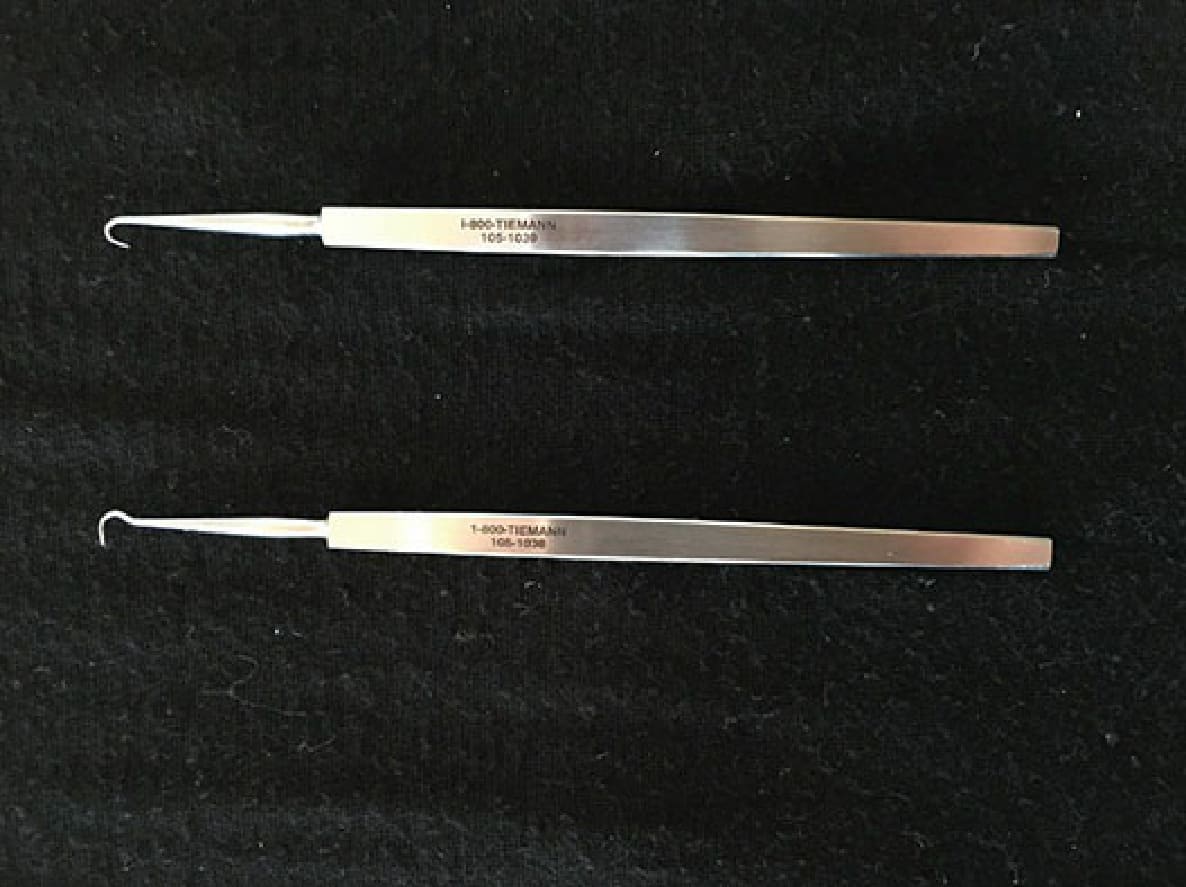
Figure 5-17. Skin hooks used in dermatologic surgery are long, tapered instruments with a small, sharp hook at the end.